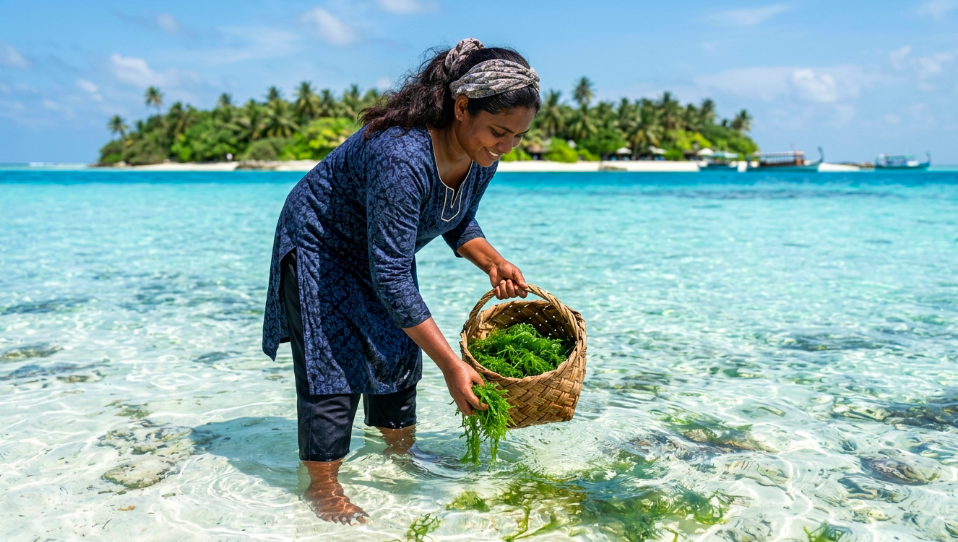

Once viewed merely as an unsightly nuisance for tourism and cleared away from shallow lagoons, seagrass is now emerging as a multi-million-dollar economic asset for the Maldives. Recent findings in marine science and the global climate economy reveal that the island nation's expansive seagrass meadows represent a vital natural treasure capable of generating substantial foreign revenue through the voluntary carbon market.
According to global environmental bodies such as the United Nations Environment Programme (UNEP) and the National Oceanic and Atmospheric Administration (NOAA), seagrass functions as one of the world's most formidable natural defences against climate change. Known as "blue carbon" ecosystems, these marine meadows can absorb atmospheric carbon dioxide up to 35 times faster than tropical terrestrial rainforests. While seagrass beds cover only about 0.2 percent of the ocean floor globally, they are responsible for locking away more than 11 percent of all ocean carbon for centuries within seabed sediments.
This carbon-capturing efficiency opens lucrative avenues for the Maldives to sell verified blue carbon credits to multinational corporations seeking to offset their carbon footprints. By scientifically mapping, quantifying, and legally protecting local seagrass beds, both national authorities and island councils have an unprecedented opportunity to secure substantial revenue streams directly in foreign currency.
Beyond financial windfalls, seagrass meadows provide critical ecological infrastructure that safeguards island communities. Their dense, fibrous root systems anchor loose marine sand, significantly stabilising shorelines and blunting wave energy to mitigate chronic beach erosion naturally. Furthermore, these meadows serve as primary nursery habitats for reef fish, sea turtles, and lobsters, underpinning local artisanal and reef fisheries.
Recognising these environmental and commercial benefits, an increasing number of Maldivian luxury resorts have abandoned clearance practices and joined conservation campaigns such as "Protect Maldives Seagrass." As eco-conscious global travelers increasingly demand sustainable and authentically protected marine environments, shifting from eradication to conservation promises both environmental preservation and long-term economic resilience.