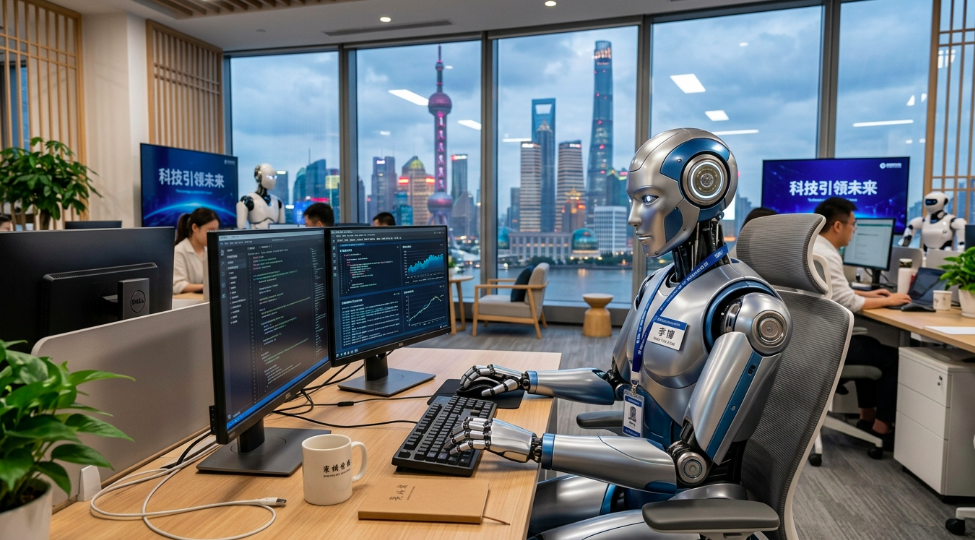

A Chinese court has ruled that employers cannot unilaterally terminate employees solely on the grounds that artificial intelligence tools can perform their roles, establishing a landmark legal boundary against unchecked automation in the workplace. The decision, handed down by the Hangzhou Intermediate People’s Court, confirms that technological redundancy alone does not meet statutory requirements for lawful employment termination.
The legal dispute cantered on an employee surnamed Zhou, who worked as a quality-assurance supervisor responsible for verifying outputs generated by large language models. Following internal technological upgrades, his employer claimed the QA responsibilities had been fully automated by AI systems, eliminating the necessity of his role and leading to his dismissal after he rejected a proposed demotion that carried a 40 percent salary reduction.
In its assessment, the court rejected the employer's contention that deploying automated AI tools constituted an unforeseeable or uncontrollable "major change in objective circumstances" under Chinese labor law. The bench clarified that adopting AI systems is a voluntary, internal business decision within the operational control of the enterprise, meaning employers cannot shift the commercial consequences of tech adoption entirely onto their workforce.
The court further established that technological disruption does not waive an employer’s statutory obligations toward workforce protection, mandating that companies exhaust reasonable avenues before considering contract termination. Where duties are phased out by software, organisations are legally expected to engage in genuine consultations, explore internal reassignments with fair compensation terms, or provide statutory severance packages rather than issuing arbitrary dismissals.
The precedent-setting ruling emerges amid growing scrutiny over AI-driven job displacement and widespread corporate restructuring across global technology sectors. Legal analysts note that the Hangzhou decision sends an unmistakable signal to employers that commercial efficiency from automated algorithms cannot override statutory labor rights and procedural worker protections.