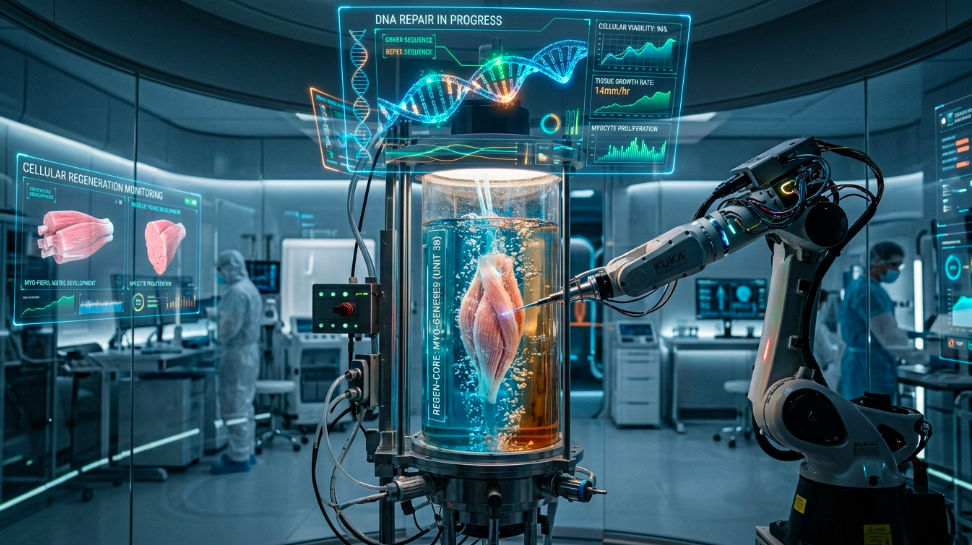

Researchers investigating the frontiers of regenerative medicine have unveiled an experimental approach that could fundamentally transform how medicine treats traumatic amputations and organ damage, according to recent scientific analyses covered by publications including Popular Mechanics. The research centers on an enduring biological puzzle: why the innate genetic mechanisms that build fully functional organs during embryonic gestation become irreversibly deactivated after birth.
At the core of the experimental strategy is a specialized "regenerative serum" engineered to awaken dormant genetic pathways that typically function exclusively during early developmental stages. The work draws significant conceptual grounding from landmark breakthroughs in cellular reprogramming pioneered by Nobel laureate Shinya Yamanaka, combined with modern bioelectric and developmental research led by scientists such as Dr. Michael Levin at Tufts University, whose lab has demonstrated partial limb regeneration in African clawed frogs.
In controlled preclinical laboratory models, mature differentiated cells exposed to targeted biochemical and bioelectric microenvironments were observed entering a state of partial cellular plasticity. Much like the natural regeneration observed in salamanders and axolotls, these reprogrammed cells regained their capacity to divide, coordinate, and form organized multi-tissue structures rather than merely depositing collagenous scar tissue.
Despite the promising preliminary data, the research consortium cautions that therapeutic application in human patients remains years away. The foremost technical obstacle lies in achieving absolute precision over cellular growth rates, as unregulated genetic activation carries substantial oncogenic risks, including abnormal tumorogenesis or irregular morphogenesis.
If ongoing trials succeed in establishing precise molecular braking mechanisms to ensure clinical safety, the paradigm of modern surgery could shift permanently. Rather than treating limb and organ loss as an irreversible disability requiring synthetic prosthetics or immunosuppressive transplants, clinical medicine could eventually harness the body's own developmental memory to regrow living biological tissue from within.