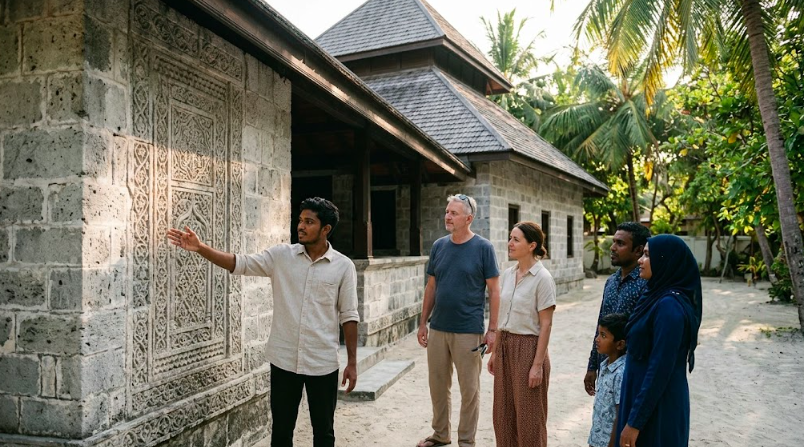

Five historic coral stone mosques in the Maldives have moved a significant step closer to being inscribed on the UNESCO World Heritage List, with the final nomination dossier scheduled for submission by the end of this month. The announcement was made by Minister Heena Waleed during the government’s public forum "Ahaa," where she confirmed that the concluding phase of preparation has been completed following positive progress on the international stage.
The initiative to secure World Heritage status for the nation's coral stone mosques has been underway as a serial nomination for 13 years, with UNESCO formally accepting the nomination file in January this year. Following comprehensive on-site evaluations conducted by the International Council on Monuments and Sites (ICOMOS) in September, authorities are integrating final technical revisions before official submission, with the government aiming for formal inscription by late next year.
Minister Heena highlighted that securing a place on the prestigious UNESCO list will bring international recognition to the country's rich historical legacy while catalyzing sustainable cultural tourism. In alignment with President Dr. Mohamed Muizzu’s vision to unlock economic benefits from national heritage, authorities are also drafting a strategic roadmap to generate revenue for historic islands associated with national hero Ghazi Bandaarain—including HA. Utheemu, Baarah, Thakandhoo, Sh. Maroshi, and L. Isdhoo.
To maximize the reach of cultural tourism, the ministry will collaborate closely with the Ministry of Tourism and Visit Maldives to showcase these heritage sites to global travelers. The nominated mosques represent a distinctive vernacular architecture cultivated through centuries of maritime trade and cross-cultural exchanges across the Indian Ocean, characterized by master carpentry, lacquer detailing, and intricate coral stone carvings with calligraphic motifs.
These monuments stand as enduring architectural testimonies to two defining eras in Maldivian history: the golden age of Islamic maritime trade and the nation's historic resilience against European colonial encroachment. Achieving UNESCO World Heritage inscription will ensure the preservation of these cultural treasures while fostering sustainable economic growth for local island communities.