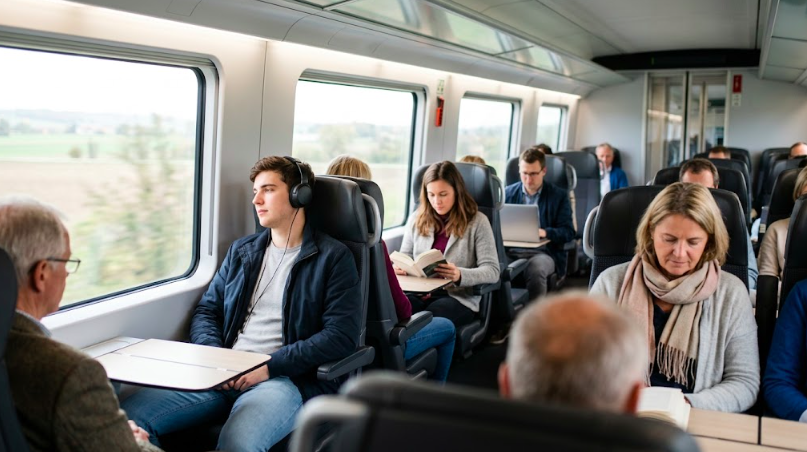

European high-speed rail operators have launched a coordinated 48-hour pilot across key transnational routes, testing strictly enforced "silent carriages" designed to provide travelers with sanctuary from digital noise and screen fatigue. The trial introduces designated low-stimulus coaches where phone conversations, speaker audio, and loud chatter are prohibited, encouraging passengers to trade constant connectivity for undisturbed rest or quiet focus.
Under the experimental guidelines, travelers entering these specific carriages are required to keep all electronic devices on silent or do-not-disturb mode. Personal audio must be strictly confined to headphones at leak-free volumes, and passengers needing to take voice or video calls must step into vestibules between train cars. Visual ambient changes accompany the auditory rules, with subtle interior adjustments aimed at subduing glaring screen glare and creating a calmer visual landscape throughout the coach.
Rail authorities introduced the initiative in direct response to post-pandemic commuter feedback highlighting rising stress levels linked to constant remote work connectivity on transit lines. With long-distance high-speed trains serving increasingly as mobile offices, open-air video conferences, repetitive ringtones, and loud media playback have become top friction points among passengers seeking either productive work intervals or tranquil travel environments.
Initial feedback from the 48-hour pilot indicates overwhelming traveler demand for dedicated quiet spaces, with many riders booking the quiet carriages out completely within hours of reservation release. As rail companies assess compliance rates, passenger sentiment, and acoustic data from the trial, plans are underway to evaluate permanent quiet car classifications and expanded low-noise schedules across broader continental rail networks.