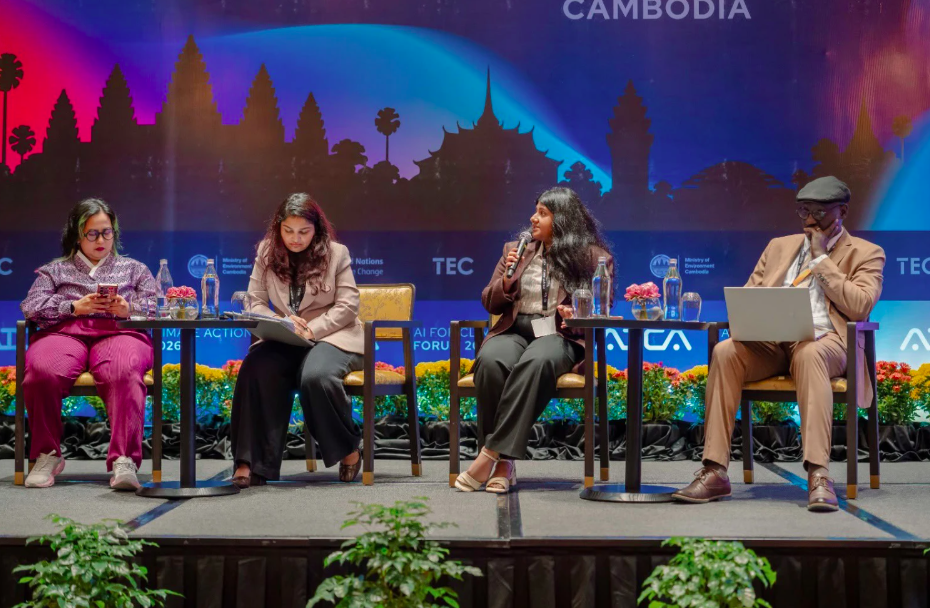

Senior Environment Management Officer Raniya Suood participated in the "AI for Climate Action Forum 2026," hosted under the United Nations Framework Convention on Climate Change (UNFCCC) in Cambodia. The forum convened international delegates and environmental experts to discuss the expanding role and broader implications of technology in mitigating global climate change.
During the event, Raniya took part as a speaker in a panel discussion focused on the risks and complex challenges of deploying artificial intelligence (AI) in climate initiatives. The discussion addressed how integrating rapid technological advancements must be carefully weighed against potential setbacks to ecological health and environmental preservation.
The panel primarily highlighted the direct and indirect adverse impacts of AI adoption on the environment, alongside the pressing need for reliable, accessible environmental data. Panelists emphasized that leveraging automated technologies without high-integrity datasets can pose significant risks to evidence-based climate strategies.
Furthermore, Raniya underscored the critical need for robust regulatory frameworks and governance models to ensure AI applications are used responsibly. Establishing sound operational guidelines was identified as an essential step toward minimizing the ecological footprint of digital infrastructures while maximizing practical climate solutions.
The session concluded with an extensive discussion on aligning AI-driven climate technologies with local community needs and national climate priorities. Delegates reiterated that digital tools should ultimately support an equitable transition, ensuring vulnerable populations and national development targets remain at the forefront of climate action.