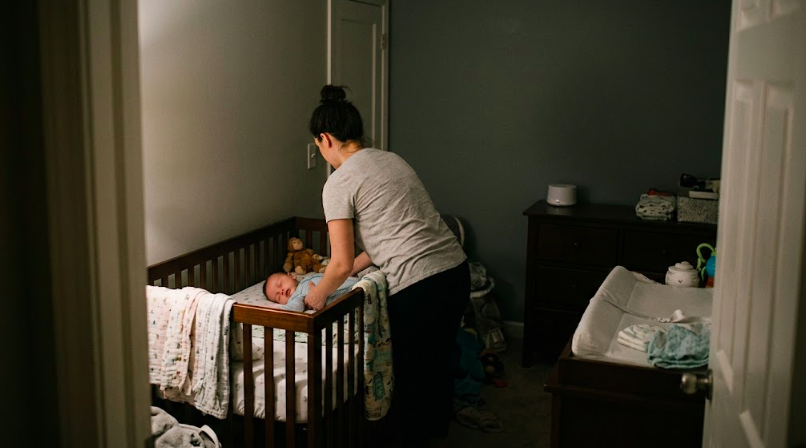

White noise machines have become an essential nursery fixture for exhausted parents seeking longer stretches of infant sleep, but paediatricians are raising urgent concerns over widespread misuse. When sound machines are played at excessive volumes or placed directly adjacent to a crib, the constant acoustic output can inadvertently jeopardise an infant’s delicate auditory health and impair critical stages of cognitive and speech development.
According to the American Academy of Paediatrics (AAP), continuous nursery background noise should not exceed 50 decibels—a level roughly equivalent to a quiet conversation, a gentle refrigerator hum, or light rainfall on a window. In practice, however, independent studies have found that numerous commercial sleep sound devices can exceed 85 decibels at maximum volume. Because infants possess thinner skull bones, narrower ear canals, and more sensitive eardrums than older children or adults, prolonged exposure to high acoustic pressure can trigger early hearing impairment.
Beyond auditory sensitivity, excessive sound masking threatens the foundational neurological processes required for language acquisition. A developing infant brain relies on hearing nuanced ambient sounds, voice inflections, household dialogue, and distinct linguistic cadences to map phonetic boundaries and speech patterns. When an unchanging wall of static drowns out the home environment around the clock, it deprives the auditory cortex of the variable sound cues needed to develop early communication skills.
“Infant eardrums are more sensitive than older children’s or adults’, and prolonged exposure to loud noises could damage their hearing, so keeping the volume low is critical,” explains Dr. Kridler, a pediatric specialist at Henry Ford Health. Dr. Kridler cautions against continuous round-the-clock usage, noting that babies require organic household acoustics for speech milestones: “Babies need to hear ambient household sounds as part of their speech and language development; they need to hear conversations, everyday noises, and the rhythm of family life.”
To mitigate developmental risks while preserving sleep benefits, paediatric experts recommend placing sound devices at least seven feet (two meters) away from the crib, ideally positioned on a distant dresser rather than clipped to the mattress or rail. Caregivers are advised to use built-in shut-off timers to limit runtime once the infant enters deep sleep, and to calibrate bedroom sound levels below 50 decibels using smartphone decibel meter applications or a simple conversational voice test.