
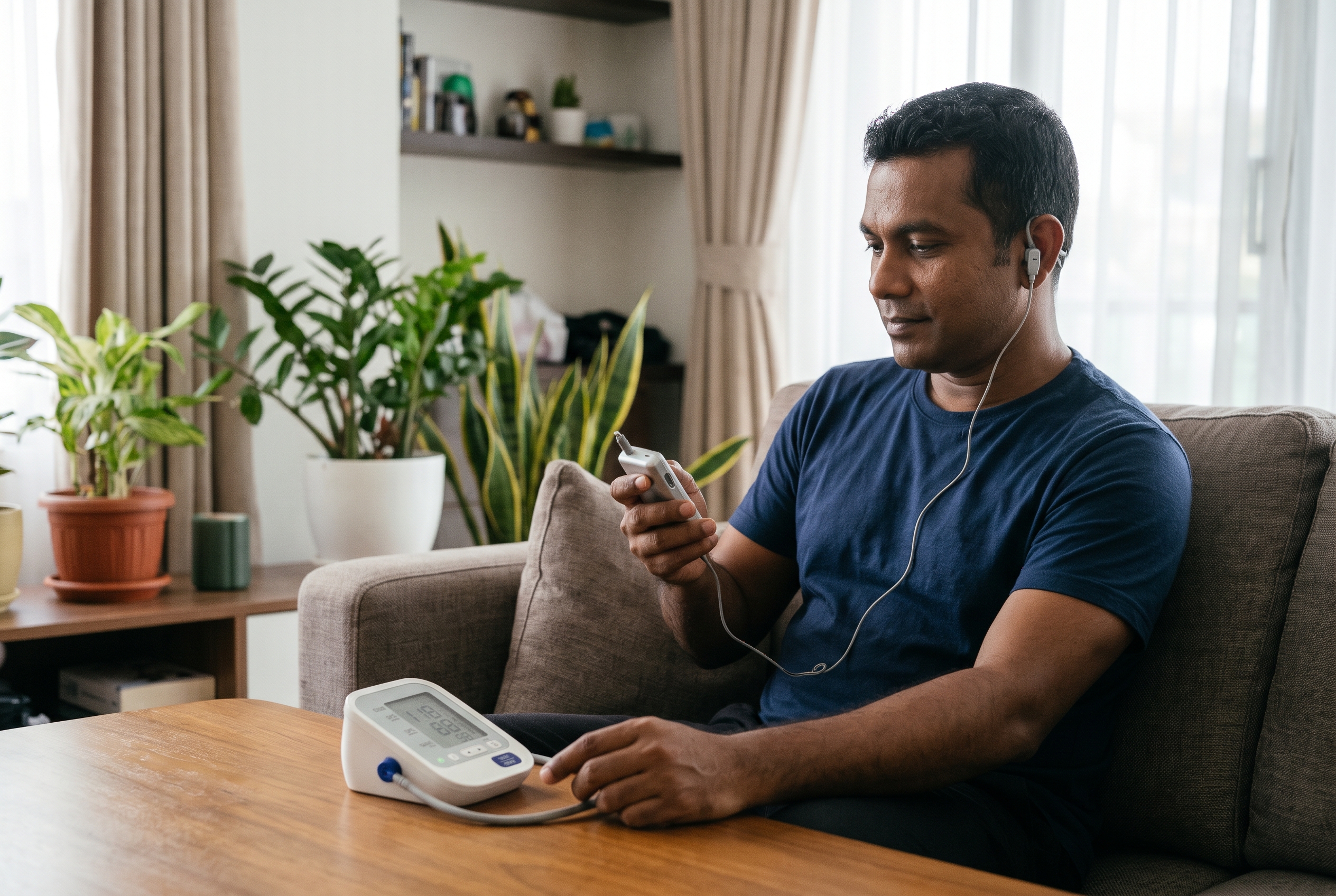
A small, non-invasive device that delivers mild electrical stimulation through the ear could offer a practical home-based therapy for individuals struggling with persistent, medication-resistant high blood pressure. The clinical trial, spearheaded by clinical researchers at Queen Mary University of London and Barts Health NHS Trust, evaluated whether transcutaneous autonomic neuromodulation could safely help patients whose blood pressure remains dangerously high despite daily prescription regimens. Findings from the study were officially published in the American Heart Association's peer-reviewed journal Hypertension.
The clinical study enrolled 63 adult patients diagnosed with uncontrolled hypertension who were already taking between one and four blood pressure-lowering medications. Participants were trained to self-administer the treatment at home using a portable handheld stimulator, applying the non-invasive ear clips for 30 minutes daily during the initial two-week induction phase, followed by once-weekly maintenance sessions over the subsequent ten weeks.
Rather than relying on invasive surgical procedures or escalating pharmaceutical doses, the experimental technique targets the auricular branch of the vagus nerve situated just below the surface of the ear skin. By gently stimulating these sensory nerve pathways, the device aims to rebalance autonomic nervous system activity, dampening overactive sympathetic signals that constrict blood vessels. While the overall trial cohort did not show a statistically significant reduction across all baseline categories compared to the sham group, patients presenting with the most severe baseline hypertension experienced notable and clinically relevant drops in blood pressure levels.
Safety and compliance data proved remarkably positive, with researchers recording no significant adverse events and confirming that patients found the daily routine comfortable and intuitive to maintain at home. "As the first and most thorough study of its kind, this points towards important new research directions that could help us understand whether non-invasive neuromodulation can benefit particular groups of patients with uncontrolled hypertension," the lead investigators noted regarding the trial's implications.
The research team emphasised that while the initial physiological signals are encouraging, broader and larger randomised trials will be necessary before the technology can be approved for regular clinical deployment. Further studies will concentrate on pinpointing specific patient profiles most responsive to autonomic modulation, determining whether targeted non-invasive nerve stimulation can eventually serve as a standard complementary therapy alongside conventional cardiovascular care.
Medical Disclaimer: This article is intended solely for informational and journalistic purposes and should not be construed as clinical or medical advice. Individuals should consult a qualified healthcare provider before altering any existing hypertension treatments or prescribed medications.