
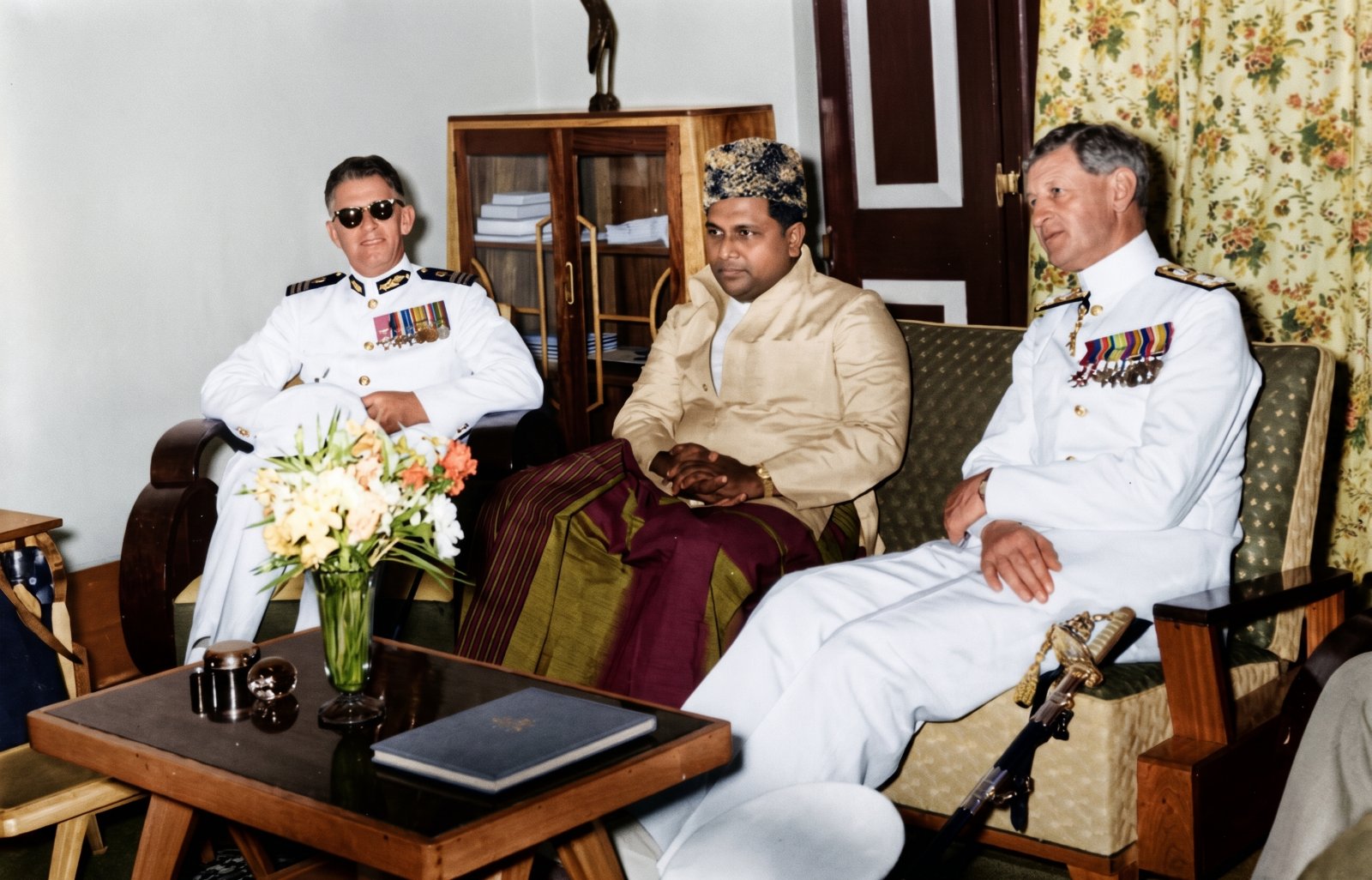
The declaration of the Republic in the Maldives marks one of the most transformative milestones in the nation’s modern political history, bringing an end to centuries of hereditary sultanate rule. While the transition reshaped governance and placed sovereign authority in the hands of the people, the monumental shift was not an overnight occurrence. Behind the birth of both the First and Second Republics stood a cadre of visionary leaders, constitutional reformers, and an active citizenry whose determination steered the country into modernity.
The conceptual foundation of republican governance was first introduced by Sumuvvul Ameer Mohamed Amin Didi, who served as the first President of the First Republic declared on January 1, 1953. Recognising that the Maldives required social reform and modern education to thrive in the post-war era, Amin Didi spearheaded progressive policies aimed at civic development and women’s empowerment. Alongside him stood key statesmen such as Velanaagey Ibrahim Didi, the First Republic’s Vice President, who carried significant administrative authority during an intensely volatile period of internal and external strain.
Although the First Republic was short-lived lasting just over seven months before a return to monarchical rule the desire for representative government remained deeply rooted among the populace. The architect who successfully revived and permanently established the republican system was Sumuvvul Ameer Ibrahim Nasir Rannabandeyri Kilegefaan. Serving as Prime Minister under Sultan Mohamed Fareed Didi, Nasir skilfully negotiated the complete political independence of the Maldives from the British in 1965, laying the essential legal and diplomatic foundation for a sovereign nation state.
Following independence, Nasir directed state machinery toward constitutional transition, organizing a nationwide referendum in March 1968 where an overwhelming 81 percent of voters endorsed replacing the monarchy with a republican constitution. When the Second Republic was officially inaugurated on November 11, 1968, Nasir assumed the presidency, backed by pivotal administrative leaders like Ahmed Zaki, who managed state machinery and executive affairs, and Sheikh Abdul Sattar Moosa Didi, who played a central role in external diplomacy and ministerial leadership. Legal minds and scholars such as Fadhilathuh Sheikh Mohamed Jameel Didi were equally instrumental, providing the constitutional draft work, legal codification, and public civic education necessary to anchor the new state apparatus.
Crucially, historians recognise that the true unsung architects of the republic were the Maldivian people themselves, whose decisive ballots in 1952 and 1968 legitimised the structural overhaul of their own government. Republic Day remains not merely a celebration of political reform, but an enduring tribute to the state planners, scholars, and voters who collectively dismantled dynastic rule to establish a nation governed for and by its citizens.