
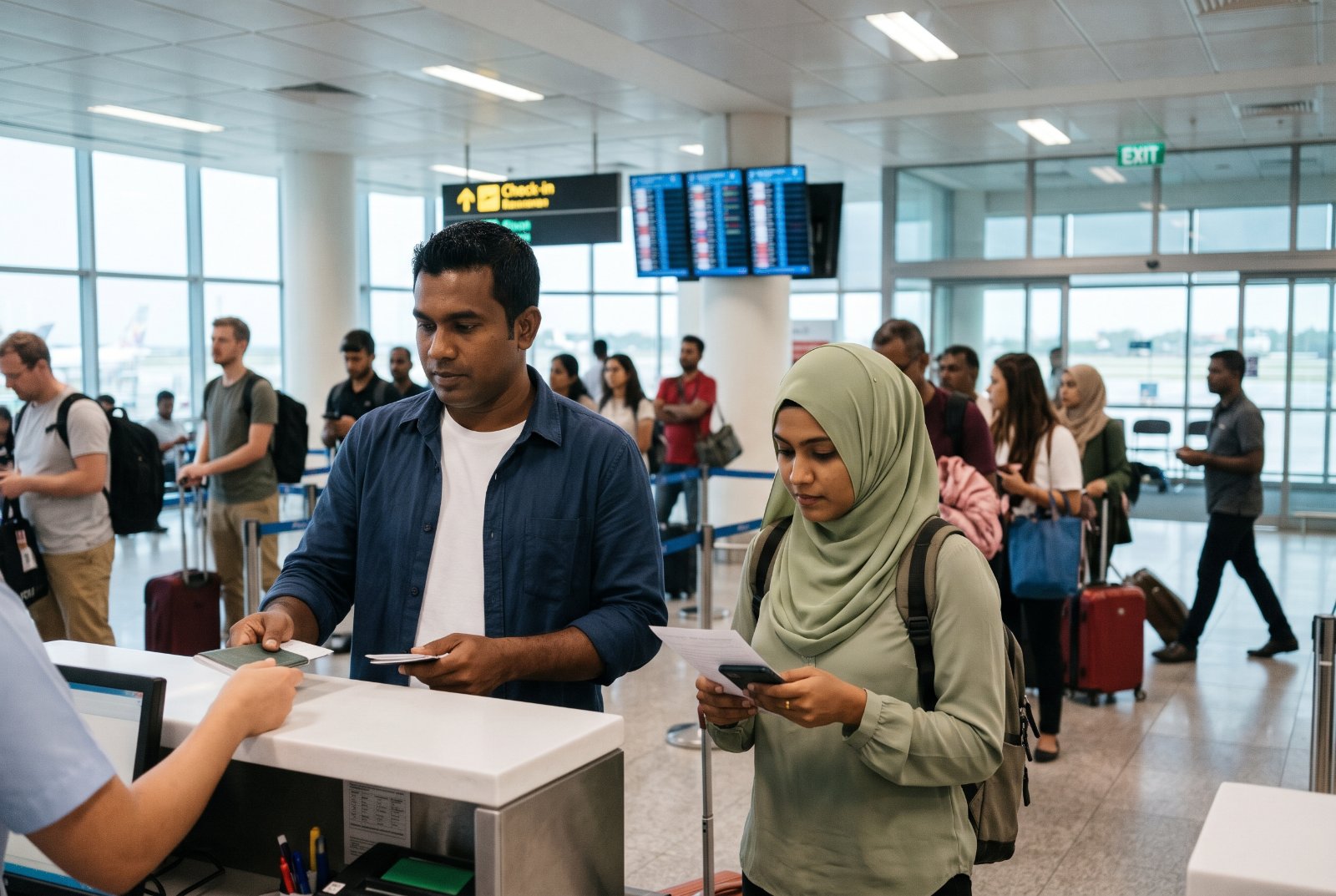
India has introduced major revisions to its visa regulations, offering significant relief and streamlined procedures for international travellers. Modelled on modern visa frameworks used by developed nations, the overhaul aims to eliminate confusion and help travellers easily identify the appropriate visa category for their trip. Under the updated system, the total number of visa categories has been reduced from 13 to 9, while sub-categories have been consolidated from 49 down to 23. Additionally, the amount of information required on visa application forms across all 23 sub-categories has been slashed by 65 to 70 percent.
The nine newly structured visa categories are Business, Diplomatic, Work, Journalist, Medical, Official, Student, Visitor, and Miscellaneous visas. While India currently issues e-visas to citizens of 172 countries across 13 classifications, the streamlined framework—including the renaming of the traditional "Tourist Visa" to "Visitor Visa"—is designed to cover a broader range of short-term travel beyond mere sightseeing. The Visitor Visa is now split into V-1 (a 30-day multiple-entry visa covering short business meetings, medical consultations, wellness retreats, and short cultural courses) and V-2 (a long-term visa valid for 1, 5, or 10 years, which also covers mountaineering expeditions under a 6-month multiple-entry permit).
Significant improvements have also been made to the Medical and Student visa categories, which are particularly vital for Maldivian travellers. Driven by Prime Minister Narendra Modi's "Heal in India" initiative, the medical framework now features M-1 visas for standard medical treatments and M-3 visas for alternative medicine, both generally issued as 1-year multiple-entry permits alongside dedicated M-2 and M-4 visas for medical attendants. Similarly, Student Visas are now divided into S-1 (for school, undergraduate, and postgraduate studies) and S-2 (for PhD scholars, researchers, and exchange programs), with students enrolling through the "Study in India" portal eligible for multiple-entry e-S1 visas valid for up to five years or the duration of their course.
Meanwhile, Business Visas have been consolidated into B-1 for long-term licensed industrial or commercial projects and B-2 for short-term contractual activities, conferences, sports, arts, and film production, alongside specific guidelines for technical specialists and engineers. For Maldivian citizens, the bilateral visa agreement remains fully intact, ensuring that the 90-day visa-on-arrival privilege for tourism and medical purposes continues without the need for prior application. However, Maldivians traveling to India for extended medical treatments, higher education, or long-term business ventures will benefit directly from the multi-year multiple-entry permits, dedicated attendant visas, and drastically simplified online application forms.