
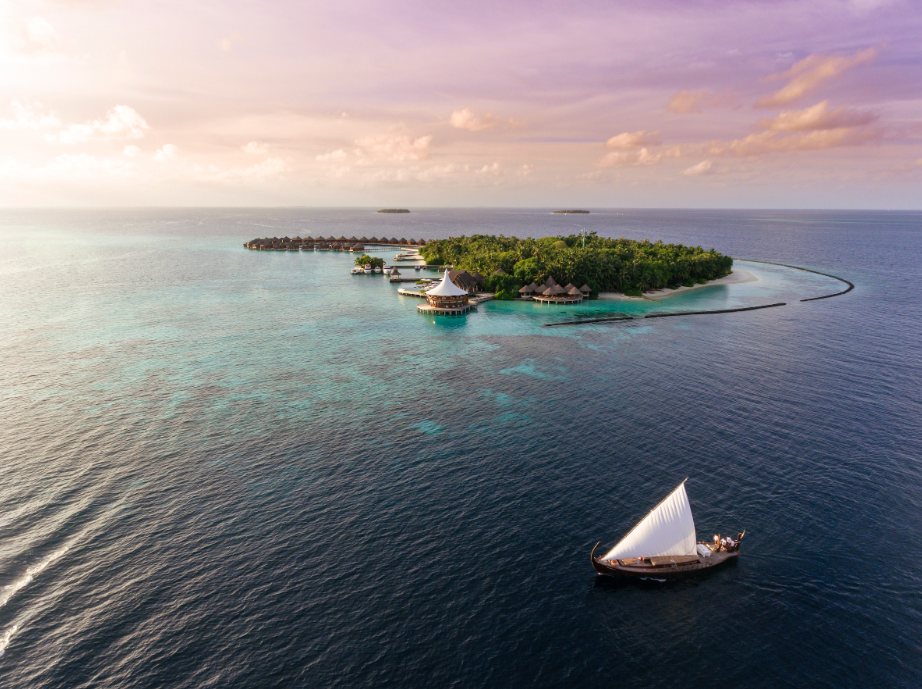
As Baros Maldives prepares to celebrate its 53rd anniversary, the milestone marks the continuation of a historic journey that began in December 1973. Set to be commemorated on December 3, this year’s anniversary celebration will feature 12 new artworks by renowned Maldivian artist Ali Ishaan (Rappe). Returning for his second consecutive annual exhibition at the resort, Rappe’s latest collection showcases paintings and handcrafted pieces deeply rooted in Maldivian culture and heritage. More than just a resort milestone, the occasion serves as a living tribute to the foundations of Maldivian tourism and the local pioneers who transformed a quiet island nation into one of the world’s premier travel destinations.
More than half a century ago, in the early 1970s, the Maldives was largely unknown to the international travel market. The national economy relied almost entirely on fishing and agriculture, and the country lacked an established air transport network. At the time, international development agencies, including the United Nations Development Programme (UNDP), famously concluded that the Maldives lacked the infrastructure and resources required to sustain a viable tourism industry. However, the arrival of Italian travel agent George Corbin in 1971 sparked a visionary shift that overturned those early assumptions.
Working alongside Corbin, young Maldivian entrepreneurs Ahmed Naseem, Mohamed Umar Maniku, and Hussain Afeef spearheaded the birth of the nation's hospitality sector, opening the first resort Kurumba Village on October 3, 1972, with 30 simple rooms built from coral stone and coconut thatch. The immediate success of Kurumba inspired local pioneers to expand carefully across nearby uninhabited islands. Following the opening of Bandos Island Resort, Baros Maldives opened its doors as the third resort in the country's history.
When Baros welcomed its first guests in December 1973, it was a small, tranquil coconut plantation island. Developed by Universal Enterprises, a 100% Maldivian-owned company, the resort was designed to preserve the island's untouched natural beauty. The original property consisted of just 28 thatched huts with sandy floors, operating without air conditioning or modern electrical grids. Instead of conventional luxury, early European travellers were drawn to the unspoiled environment, barefoot freedom, and peaceful isolation.
In those pioneering years, life on Baros was defined by close camaraderie between international guests and the Maldivian staff. Evenings often cantered around beach bonfires, freshly grilled fish caught that day, and stargazing under clear island skies. Operating primarily during the European winter season, Baros left its natural vegetation intact and avoided land reclamation, inadvertently establishing an early blueprint for sustainable island tourism in the Indian Ocean.
By the 1980s, growing international interest prompted thoughtful upgrades to the island's facilities. In 1984, Baros became the first resort in the Maldives to install a desalination plant, replacing the traditional practice of bathing in brackish well water with fresh water. A year later, in 1985, new accommodations constructed from traditional coral stone and lime expanded the resort's capacity to 40 rooms while honouring indigenous building techniques.
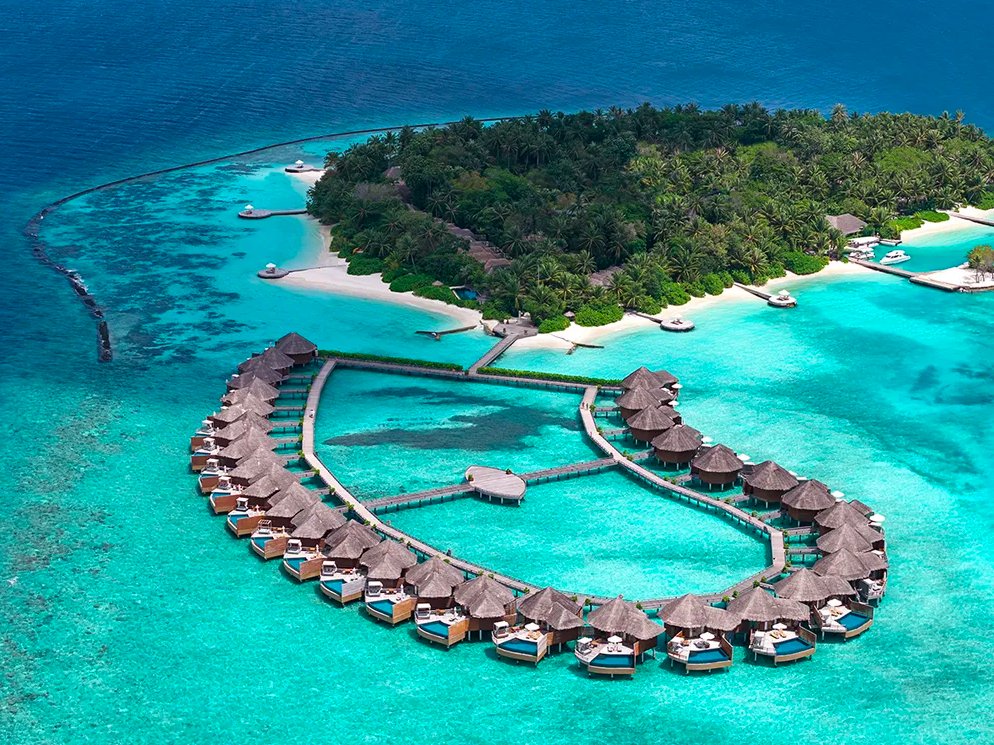
The 1990s ushered in a new era as the Maldives began positioning itself as an upscale luxury destination. Baros embraced this evolution by introducing overwater bungalows in 1990 and 1992, placing it among the earliest resorts in the archipelago to pioneer overwater living. In 1996, the original rustic huts were replaced with spacious timber-and-thatch villas crafted to highlight traditional Maldivian carpentry, elevating the guest experience to modern luxury standards.
When the 2004 Indian Ocean tsunami struck, widespread devastation hit numerous islands across the archipelago, yet Baros was largely shielded by its healthy surrounding coral reefs and dense natural vegetation. Just a year later, in 2005, the resort underwent a comprehensive architectural transformation led by Maldivian architect Mohamed Shafeeq (Sappe), emerging as an iconic boutique luxury retreat. Among the defining landmarks of this redesign is The Lighthouse Restaurant, whose sweeping white roof mirrors the sails of a traditional Maldivian dhoni.
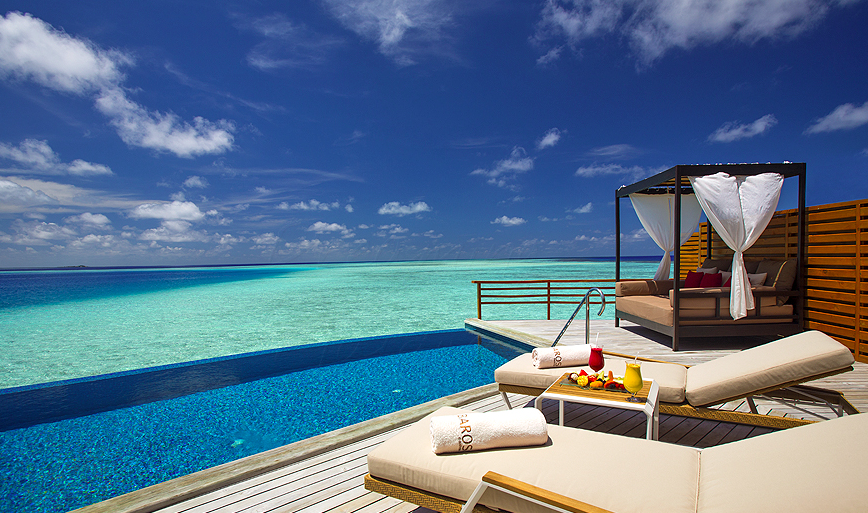
Today, operating with 75 private villas, Baros remains one of the few resorts in the Maldives still proudly owned and managed by Maldivians. Alongside long-running marine conservation initiatives such as its coral propagation program launched in 2006 the resort continues to earn global acclaim, having been named the second-best resort in the world and the number-one resort in Asia at the 2026 Travel + Leisure World’s Best Awards. It stands as enduring proof that a modest venture begun in 1973 could achieve world-class excellence without losing its soul.
As Baros marks 53 years of hospitality through the cultural lens of Rappe’s latest art exhibition, the celebration bridges the resort’s humble beginnings with its modern legacy. Many of the young adventurers who first visited the island in the 1970s now return with their children and grandchildren, drawn back by the same genuine Maldivian warmth that defined its opening days. Across more than five decades of Maldivian tourism history, Baros Maldives endures as a timeless symbol of local craftsmanship, cultural pride, and sustainable island hospitality.