
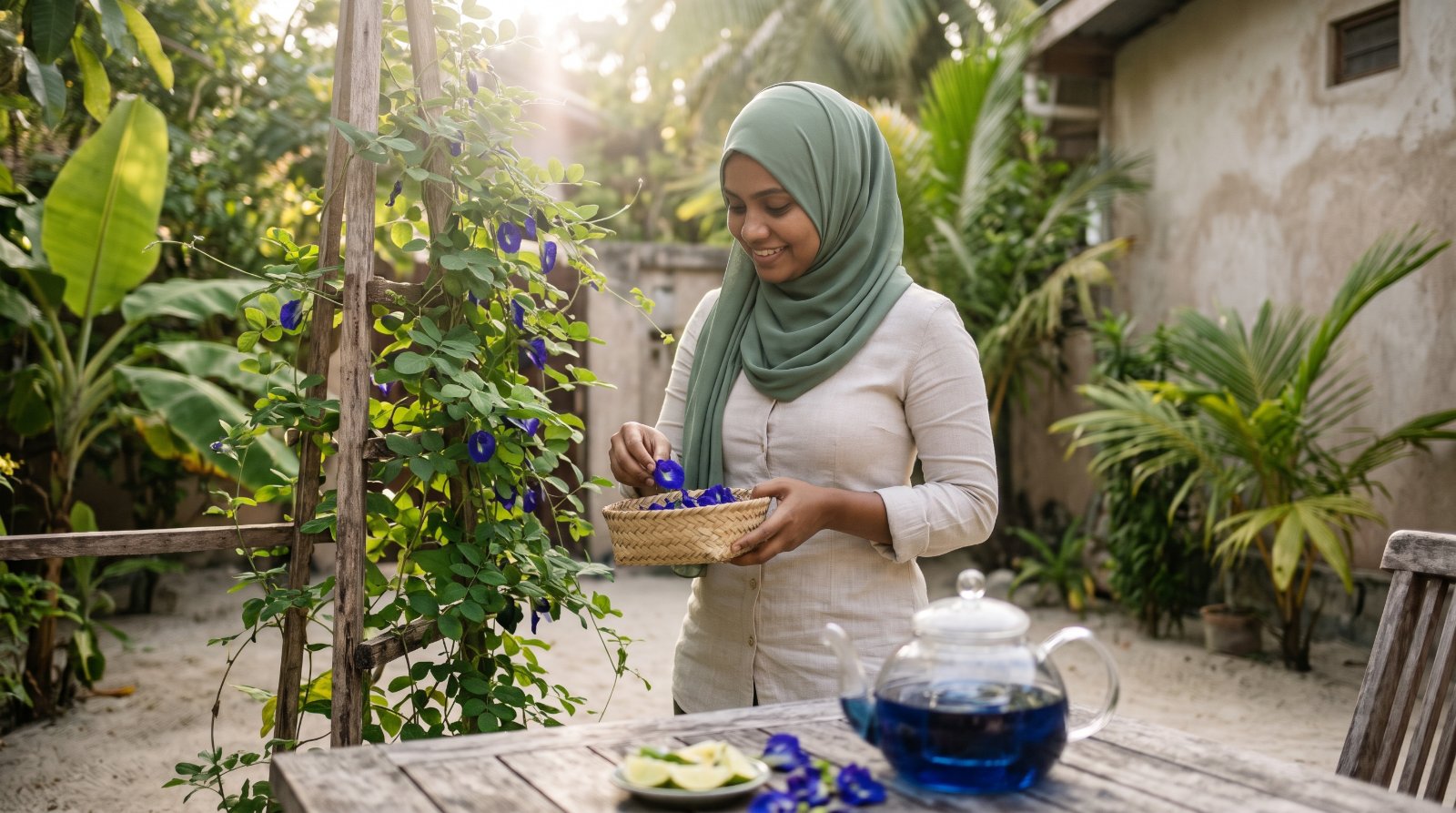
Researchers at the Plant Genetic Resources Bank for Vegetable, Floriculture, Aromatic and Medicinal Plants (BRGV) in Buzau, Romania, have successfully acclimatised and stabilised a new variety of butterfly pea (Clitoria ternatea)—a vibrant blue climbing vine widely familiar in Maldivian backyards as nanreethi maa—at a time when the flower has been classified as a "novel food" across the European Union in 2026. Originating in equatorial regions, the resilient tropical plant thrives in both open fields and controlled agricultural spaces.
According to BRGV Buzau Director Costel Vinatoru, the plant's highest commercial and culinary value comes from its bright blue petals, which yield an all-natural pigment for fabrics, food dishes, and specialty drinks. Serving as a natural alternative to artificial food dyes, the flower extract reacts to the acidity and pH balance of whatever liquid it is added to, smoothly shifting in hue from deep blue to purple and pink.
Beyond its visual appeal in food and landscaping, agricultural scientists note that the vine plays a valuable role in rehabilitating depleted farmland. Beneficial bacteria housed in the plant's root nodules absorb nitrogen from the atmosphere and lock it into the soil, naturally enriching fertility for future crops. Having achieved a uniform and genetically stable cultivar, the Buzau research station is preparing to submit the new variety for official registration.
Although blue herbal infusions made from the blossoms are widely enjoyed across Asia and tropical island communities, European regulators have tightened rules surrounding their sale as food or drink. Anca Daniela Raiciu, president of the Planta Romanica Employers' Association, explained that on February 12, 2026, the European Commission concluded the authorisation process for dried butterfly pea flowers under its novel food framework, meaning they remain unauthorised for commercial sale as teas or dietary supplements despite appearing on certain online storefronts.
Under European Union law, any ingredient without proven records of widespread human consumption in Europe prior to 1997 is automatically placed on the novel food list. Raiciu noted that while butterfly pea extracts continue to be permitted in topical skincare cosmetics—such as facial toning and revitalising pads anyone using botanical or aromatic plant preparations should carefully follow manufacturer dosage instructions and verify which part of the plant is safe for use.