
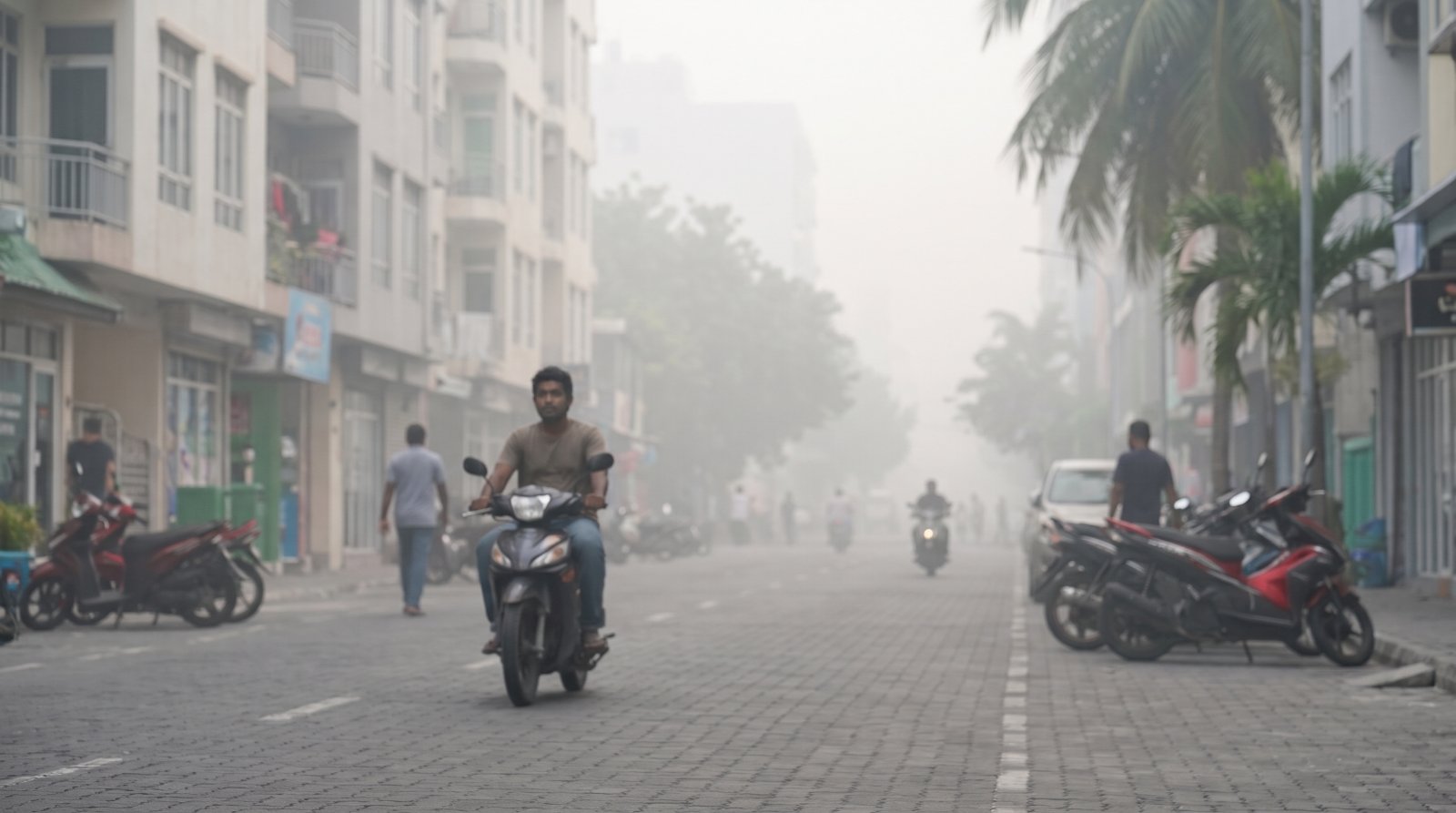
As the Maldives experiences widespread haze affecting air quality across the country, health and weather authorities have urged the public to take immediate precautionary measures. The Maldives Meteorological Service (MET) has forecast that the haze which has significantly reduced visibility and deteriorated air quality will persist over the next five days, with particularly heavy concentrations expected over northern and central atolls.
In response, health experts and the Health Protection Agency (HPA) have issued vital safety guidelines to help the public minimize the health risks associated with breathing in fine particulate matter. "With the air quality noticeably declining, it is crucial for everyone, especially those in high-risk categories, to limit their exposure to the outdoors and take protective steps," an HPA official advised, emphasizing that the fine particles in the haze can trigger or worsen respiratory conditions.
Medical professionals strongly advise individuals to stay indoors as much as possible, keeping windows and doors tightly shut to prevent the outdoor haze from penetrating living spaces. For those who must venture outside, wearing a high-efficiency mask, such as an N95 or KN95 respirator, is highly recommended, as standard cloth or surgical masks may not adequately filter out fine particles.
Additionally, the public is urged to avoid strenuous outdoor activities, such as jogging, sports, or heavy physical labor, because rapid breathing during exercise increases the inhalation of harmful pollutants.
Vulnerable populations including young children, the elderly, pregnant women, and those with pre-existing conditions like asthma, bronchitis, or heart disease—are advised to be exceptionally vigilant. Such individuals should ensure they have a sufficient supply of their regular medications, particularly inhalers, and seek medical attention immediately if they experience symptoms such as breathing difficulties, persistent coughing, chest pain, or eye irritation.
Reference:
World Health Organization. (2021). WHO global air quality guidelines: particulate matter (PM2.5 and PM10), ozone, nitrogen dioxide, sulfur dioxide and carbon monoxide.
Health Protection Agency. (2026). Precautionary measures to take during hazy weather conditions. Ministry of Health, Maldives.